 Legislative Intel
Assign measures to the clients they affect and let new legislative text re-score that impact over time.
AI for Oregon lobbyists
Client-aware monitoring built for the Oregon legislative process.
This page is not about AI magic. It is about getting from multi-client tracking to real decision support faster during session.
Schedule a Demo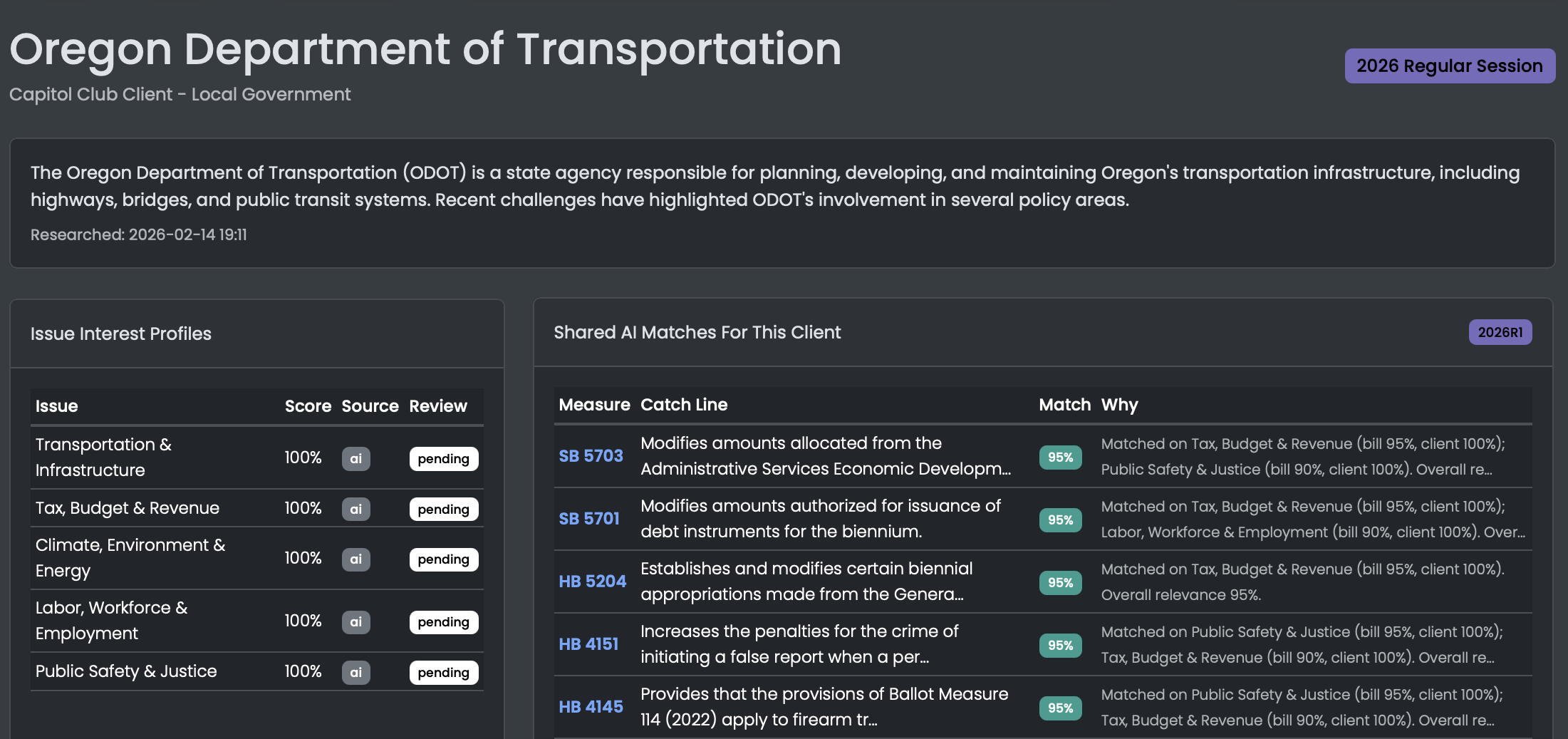
Built For Client Work
The system searches for impact so you do not have to start from keywords.
Oregon lobbyists represent multiple clients, each with different industries, exposure, and timing needs. Legislative Intel is designed to hold that client context close to the monitoring workflow.
See policy effect, stakeholder implications, fiscal exposure, and political viability in a reviewable format.
Focus on the moments that matter when a hearing is scheduled, an amendment lands, or a fiscal note changes the math.
What the Workflow Looks Like
From client intake to action.
1. Describe the client
Anchor industry, issue interests, and known risks.
2. Monitor automatically
Track measures, committees, amendments, and fiscal signals against that profile.
3. Prioritize the queue
Push likely impact to the top as the facts change during session.
4. Brief and respond
Generate client-ready summaries and drafting support from the same context.
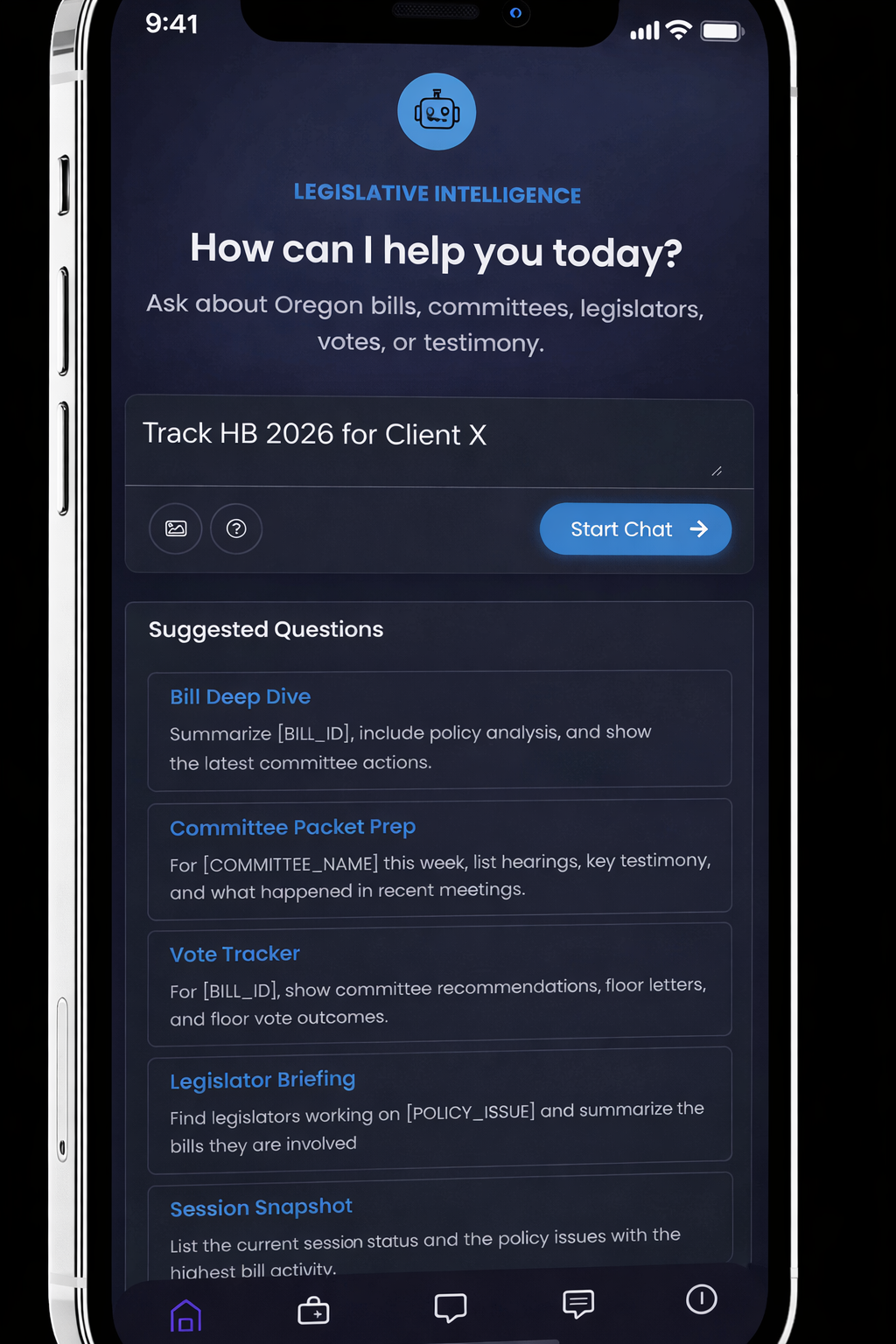
Rapid Response
Drafting assistance belongs in the same professional workflow.
When a bill shifts, lobbyists need to evaluate the change and often prepare a response quickly. The drafting layer is built as a continuation of monitoring, not a separate disconnected tool.
01
Review the new text
Understand how the amendment changed the bill relative to prior assumptions.
02
Check the fiscal layer
Tie the language back to budget exposure or revenue effect before reacting.
03
Draft internal language
Generate a structured summary or proposed language for internal review.
04
Move to client action
Translate the analysis into a clearer, faster response workflow.
For Oregon lobbyists
Replace manual scanning with a client-aware review queue.
Request access to Legislative Intel Oregon and see how the platform is designed around client work instead of generic tracking.